Game Review--Banish the Snakes
In this cooperative game, players take on the roles of saints in Ireland (starting with Saint Patrick and his contemporaries, but including others later) trying to convert the island to Christianity from druidical paganism.

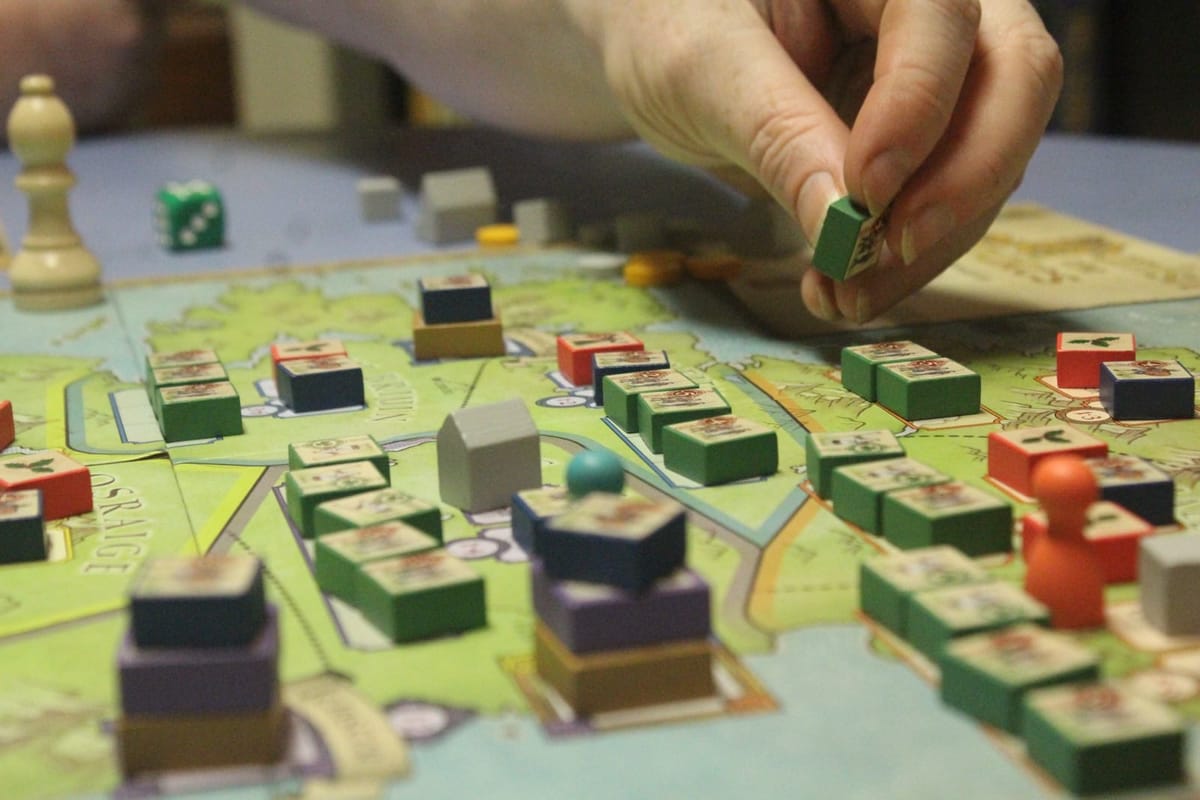
In this cooperative game, players take on the roles of saints in Ireland (starting with Saint Patrick and his contemporaries, but including others later) trying to convert the island to Christianity from druidical paganism. And by “convert”, I mean there are many, many small population tokens including chieftains, druids, and the general populace, all of which a player may choose to roll a die to flip over to a Christian side.
What I Liked: Each individual saint has particular strengths and weaknesses, and players are likely to change saints over the course of the game. This makes it important to work together, so players can take advantage of their temporary strengths, but it’s also unlikely that a player will be pigeonholed in the same role the whole time.
What I Didn’t Like: Since success at conversion involve a die roll, luck in involved. But worse, before you can convert any other tokens, you have to convert the druid in a territory… and you don’t know how difficult it will be to do that, but if you fail you get an almost-permanent malus. This game could be frustrating if playing with somebody who doesn’t understand probability, although it might be suitable as a teaching tool.
What’s Unique: Many other cooperative games use an event deck, but Banish the Snakes puts a new twist on it—the effects of one turn’s event card depend on the previous card. A good card previously might make a bad card do almost nothing, and vice versa. This means every shuffle of the event deck results in a totally different game experience, straightforward, skin-of-your-teeth difficult, or theoretically impossible. (The game has an alternate point-based scoring mechanism if you can’t convert everyone before the end.)
Review by Tom Williams.